
Exploring Bullying Through Drama
By David Farmer
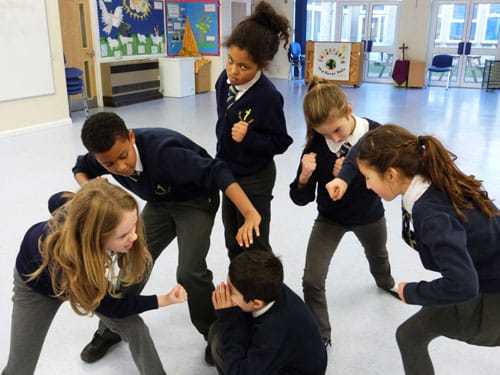
Drama is ideal for highlighting and exploring bullying issues, giving pupils the opportunity to try out anti-bullying strategies for themselves.
Below are two such approaches, suitable for key stage 2 children (from seven to eleven year-olds) as well as older students.

How does bullying start?
Flashbacks and Flash-Forwards
Using flashbacks or flash forwards creates a context – it shows what leads up to a particular moment, how it might be resolved or how it might develop. A setting is given, such as a playground or classroom. Pupils are asked to think of freeze frames related to bullying. The group stands in a circle and one by one, participants step in to make a still image as part of a developing tableau. When sufficient characters have been added, thought tracking is used to establish more about the characters.
Explain that when you clap your hands, you would like the students to move silently in slow motion to where they think their character would have been a few moments before. Again they are thought-tracked. Return them to the present moment and then flash forwards to show what might happen next. Using this technique you have created an episode with a beginning, middle and end and can develop it in any number of ways. This can lead onto discussion, hot-seating, role-play and writing.
(From the book Learning Through Drama in the Primary Years by David Farmer.)

Gathering opinions about bullying
Where Do You Stand?
This activity enables pupils to explore their own opinions and understand how others feel about bullying. Set up two chairs with “Agree” and “Disagree” signs. Read out one statement at a time and ask the children to place themselves according to what they believe, stressing that there is not always a “right” answer. Pupils standing near each other can discuss their decisions and random students can be picked out to explain why they have chosen their particular location. Following this, children can change position if they have formed a new opinion.
Suitable statements include:
- It’s best to keep it a secret if you are bullied.
- If you see somebody in trouble you should try to stop the bullies.
- It’s OK to call someone a name if you are only joking.
- It’s better to tell a friend about bullying than to tell the teacher.
- If you ignore bullies they will go away.
- Anyone can be a bully.
DRAMA DOWNLOAD
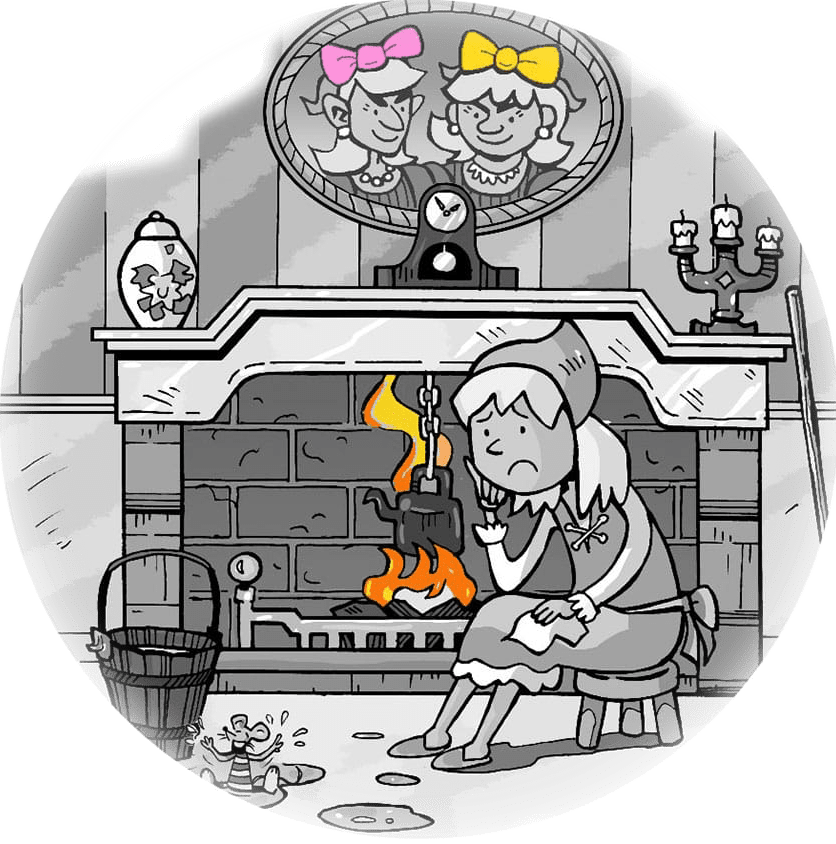
Cinderella - Bullying (5-11 years)
A series of drama and writing activities exploring bullying issues through the story of Cinderella, using these drama strategies: Essence Machines, Forum Theatre, Improvisation, Tableaux, Teacher in Role, Ten Second Objects, Role Play, Rumours, Speaking Objects, Thought Tracking and Storytelling Whoosh!
The approach uses aspects of the Restorative Justice model, focusing on how an individual’s behaviour affects others and how they can learn from it (no previous knowledge required).
Buy the 9-page Cinderella Drama Unit (PDF) for just £5.49 with credit/debit card, PayPal, Apple Pay or Google Pay.

12 Tips for Learning Lines

5 Creative Drama Ideas For Your Classroom
7 Levels of Tension

Bringing Fairy Tales to Life through Drama

Bullying – Exploring Issues Through Drama

Devising Theatre

Dorothy Heathcote – Pioneer of Educational Drama

Drama Across the Curriculum

Drama For Writing

How to Direct a Show Online

Ideas for Drama Clubs

Keeping Control in the Drama Lesson
Key Stage 1 Drama Lesson Ideas

Key Stage Two Drama Lesson Ideas

Make your own frog and toad puppets

Music for Drama Workshops

Non-Verbal Communication

Planning A Storytelling Drama Lesson

Podcasts and Webinars with David Farmer
Primary Drama Ideas

Shortened Shakespeare
Six Books on Drama for Language Teaching and Learning

Story Books for Drama Teaching

Teaching Drama One to One

Teaching Literacy Through Drama
The Power of Pause with Linda Lord

Top 5 Books for Teaching Shakespeare to Children and Young People

Why Teach Drama to Primary School Children?
12 Tips for Learning Lines
5 Creative Drama Ideas For Your Classroom
7 Levels of Tension
Bringing Fairy Tales to Life through Drama
Bullying – Exploring Issues Through Drama
Devising Theatre
Dorothy Heathcote – Pioneer of Educational Drama
Drama Across the Curriculum
Drama For Writing
How to Direct a Show Online
Ideas for Drama Clubs
Keeping Control in the Drama Lesson
Key Stage 1 Drama Lesson Ideas
Key Stage Two Drama Lesson Ideas
Make your own frog and toad puppets
Music for Drama Workshops
Non-Verbal Communication
Planning A Storytelling Drama Lesson
Podcasts and Webinars with David Farmer
Primary Drama Ideas
Shortened Shakespeare
Six Books on Drama for Language Teaching and Learning
Story Books for Drama Teaching
Teaching Drama One to One
Teaching Literacy Through Drama
The Power of Pause with Linda Lord
Top 5 Books for Teaching Shakespeare to Children and Young People
